
reloading
Figuring It Out - Hacksaw Not Included
September 4, 2026
I decided to head up to the family property in East Texas for Labor Day weekend this year, so in the week leading up to it, I set out to load a batch of 35 Remington cartridges in case I wanted to do some shooting while I was there. Sitting down at the bench one day after work, I began working through the resizing and decapping steps like I always do - lubing the cases with Hornady OneShot, running them through the press, and wiping away the excess OneShot with a towel. I was almost done with the batch of 20 cases when all of a sudden, a case I had raised into the press didn't want to come out as easily as the others had. This had happened before with previous 35 Rem. cases and just a little extra force usually dislodged them. This time, however, when I lowered the ram, the shell holder ripped away from the rim, leaving a case still inside the die and a mangled rim that the shell holder would in no way go back onto.
Believe it or not, I had never had this happen before. I am usually pretty diligent about applying enough case lube, but I've been told that if you reload long enough it'll eventually happen to you. So there I was - unable to finish resizing the batch of cases I was working on and not quite sure what to do since I had never had this problem before. Thinking through the mechanics of the die, I realized that the mandrel (the steel rod running through the die which pushes the primer out of the primer pocket) was in contact with the case head. If I could remove the lock screw holding the mandrel in place and drive it downward by tapping on it with a hammer, perhaps I could push the stuck case out. I decided to give it a try, but not sure that this was an approved method, I didn't tap very hard since I didn't want to damage the die. Unfortunately, the case didn't budge. Hoping that perhaps it wasn't stuck too tightly, I then tried using pliers to twist and break it free, only to further mangle the case head. I then had the idea to try and drill through the side of the case in hopes of weakening the walls of the case enough to collapse it and break the grip of the die, but alas, the case stayed stuck in the die.
At this point I did what every good engineer does - I set down the problem and walked away to think about it some more before taking any additional action. I considered buying a new die or taking it to a gunsmith, but neither could be achieved in enough time to get my loading done before heading to East Texas. I began an internet search trying to see how other people solved this problem, and while I found plenty of information, none of it was for the particular brand of dies I use - Lee dies. Finally, though, I did what I should have probably done in the first place, and went to the Lee Reloading website thinking that surely they had to have instructions for how to remove a stuck case. Reading through the Lee literature, I felt somewhat vindicated in my thought process since it described basically what I had first thought to try - loosening (but not removing) the lock screw and using a flat punch and hammer to tap the mandrel until the case came out.
I went back to the bench, but since I didn't have a flat punch, I had to go back to my original plan of removing the lock screw and tapping the mandrel directly. I put a towel on the mandrel to help protect it, and began tapping with the hammer with more force than I previously had, now more confident in the approach. Sure enough, after a couple solid taps, the case came loose and both the case and mandrel clattered onto the bench. Satisfied with the result, I picked up the case only to realize that the mandrel was now stuck in the case - the expanding bell of the mandrel had driven down past the neck and was now stuck inside at the case shoulder. Nothing in the Lee manuals had mentioned this, so I was now on my own without a clue. Setting the problem down, I resolved to come back to it yet again after having more time to think about it. Going about my day, I kept thinking that since I couldn't pull the mandrel back through the neck of the case, if I could somehow separate the head of the case from the body, I could pull the mandrel out the other end. And eventually I realized I did have the right tool for that - a hacksaw.
Going back to the bench again with my hacksaw in hand, I pinned the case on the bench with a set of pliers and used the hacksaw to begin cutting through the case, rotating it periodically until I had cut through 3/4 of the circumference. I then used a second set of pliers to grip the case head and peel it back like the lid of a tin can. Upending the case, the steel rod dropped through and I had my mandrel back. Now I just needed to put the mandrel back in the die, secure it with the lock screw, and then I could continue on with my resizing and loading. But no sooner had I tried to do just that when a new problem surfaced. Sliding the mandrel back through the die, the mandrel wouldn't fit back into the lock screw. Taking a closer look at it, I realized why Lee recommended a flat punch - banging on the end of the mandrel had slightly mushroomed the end, such that it was too big to go back in the lock screw.
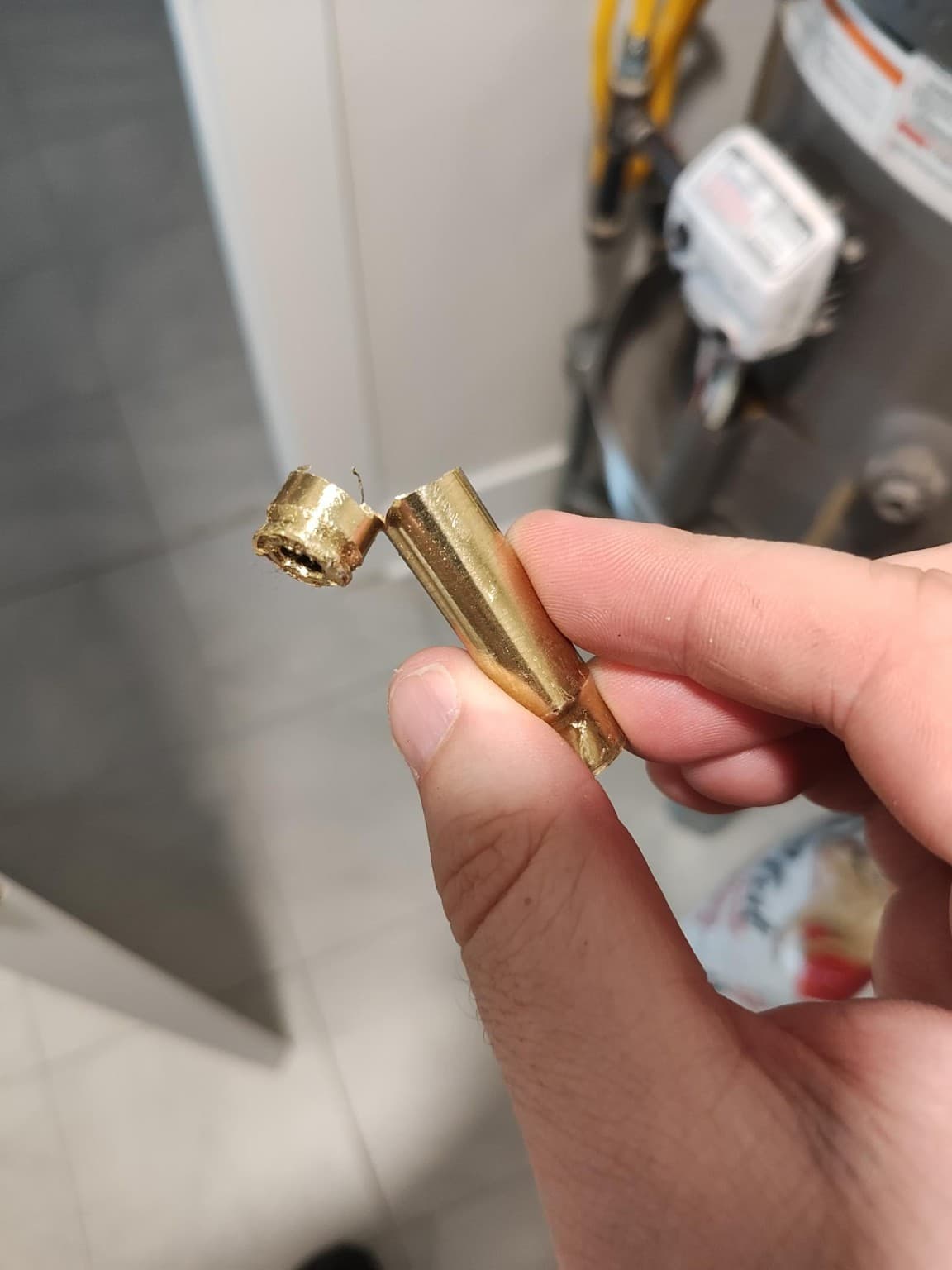
For the third time, I set the problem down to think about this new development. I considered buying a new mandrel - but again, it wouldn't arrive in time before heading to East Texas. Remembering I had a set of needle files, I decided to try filing down the mushroom on the mandrel and seeing if that would solve the problem. Getting my files out, I started filing down the mushroomed mandrel. I worked my way around the circumference of the mandrel, and over the course of 20 to 30 minutes I got it smooth and rounded. When I tried to slide it into the lock screw, it mercifully went right in.
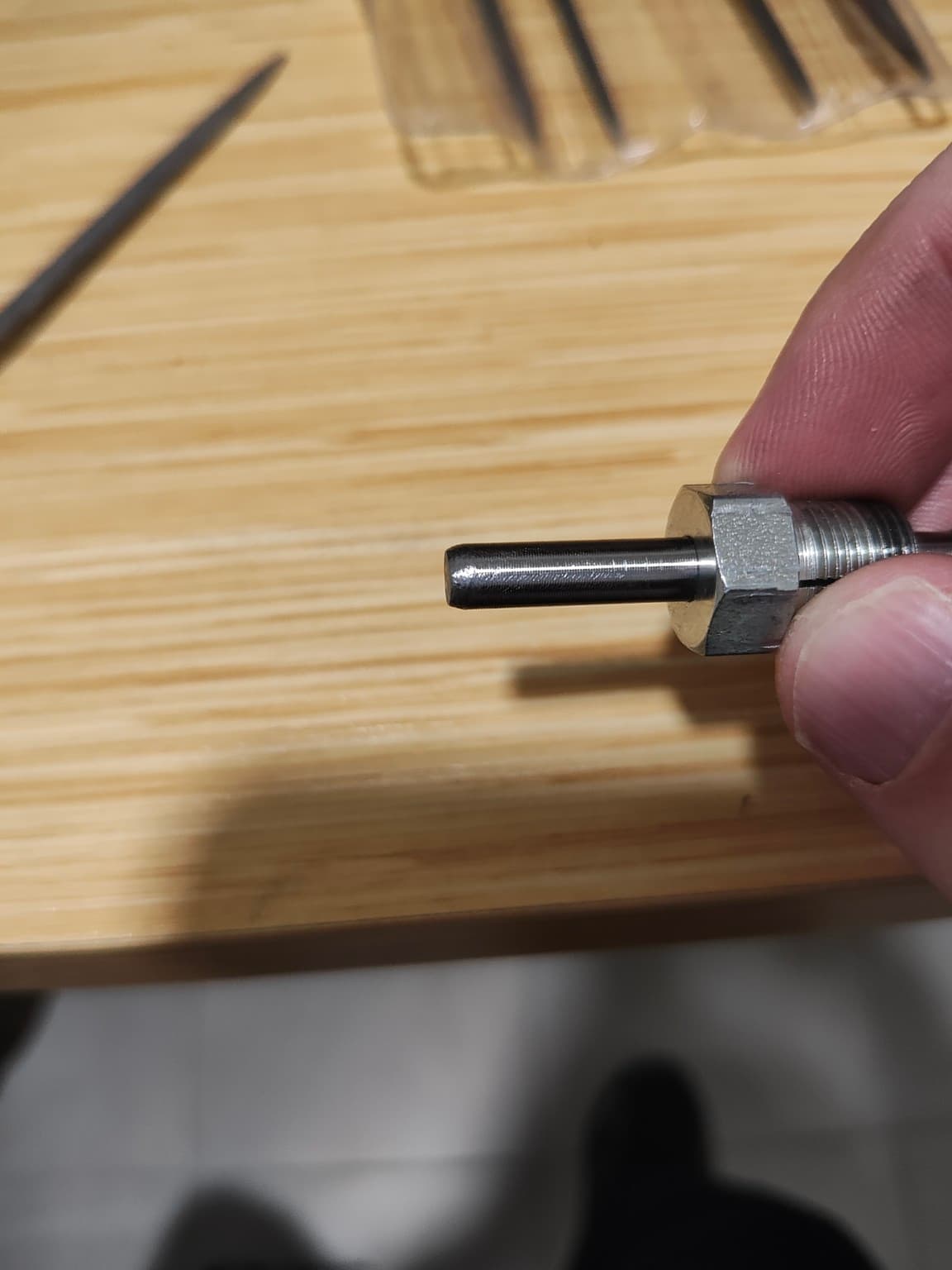
You can't imagine my relief when it did - all that troubleshooting and problem solving had paid off. Although I was able to get back to resizing and decapping, it was late enough that I didn't want to start a whole loading process. So after sizing, I primed all the cases so they were ready to go the next day when I had time to get back to it. As I laid in bed that night, I thought about a quote from the movie, The Martian. At the end of the movie after Matt Damon's character has made it back to Earth, he gives a lecture to a class of astronaut candidates. In describing his harrowing ordeal he says, "At some point, everything's gonna go south on you...and you can either accept that, or you can get to work. You solve one problem, and you solve the next one, and then the next. And if you solve enough problems, you get to come home." As an engineer, that quote resonates with me and it's neat when you actually get to see it play out in real life. In the grand scheme of things, figuring out a stuck case probably doesn't amount to much. But it reminded me that while I didn't have all the answers along the way, just by doing what was in front of me and solving the next problem, I eventually got where I needed to be.