
reloading • rifles
.360 Buckhammer 200gr FTX — Backing Off a Published Load
May 6, 2026
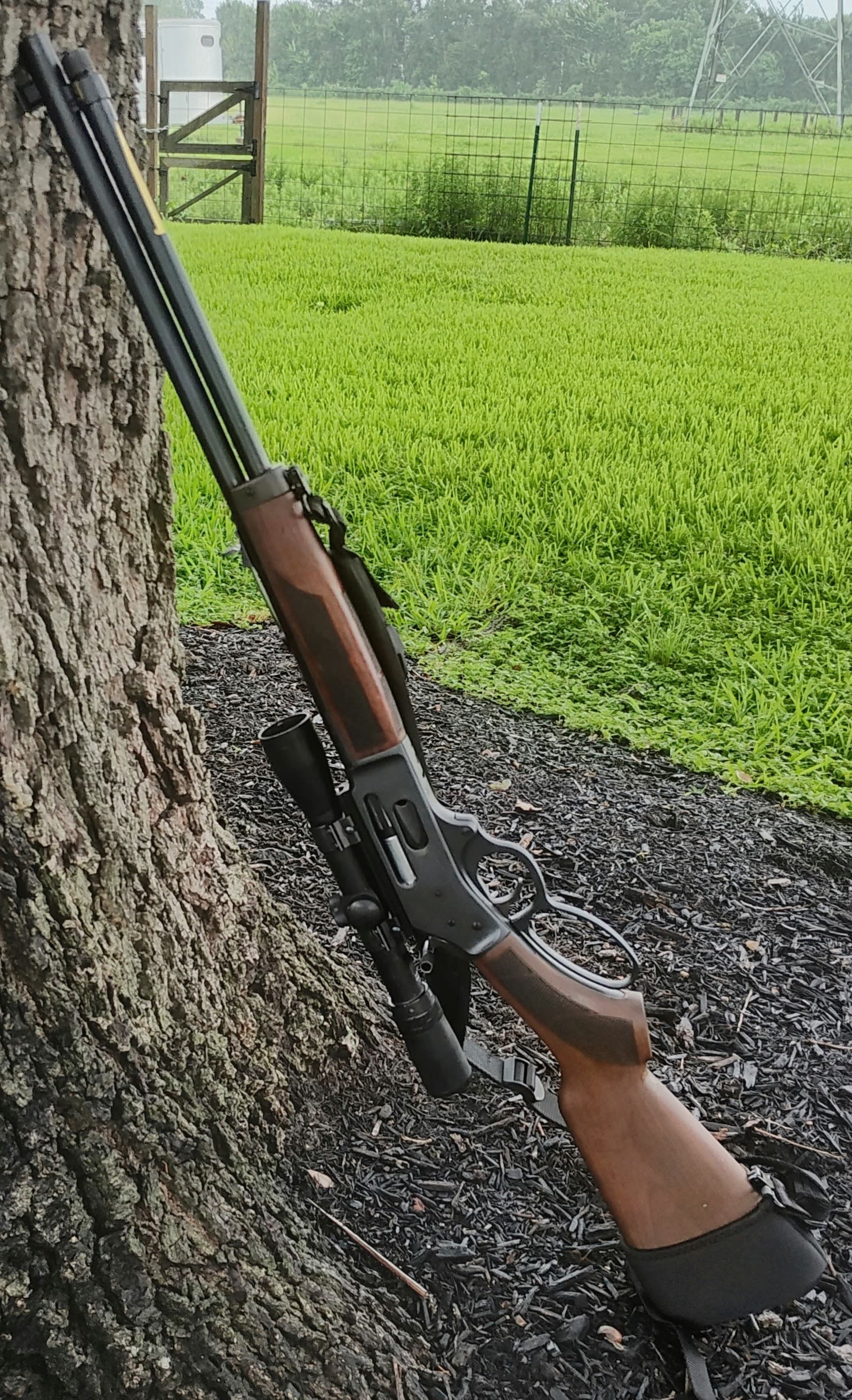
It's no secret that I am fond of that quintessential, highly lauded, and yet not as popular woods cartridge, the .35 Remington. I have carried my late grandpa's Marlin 336 chambered in that venerable caliber into the woods on more than one occasion, and have taken game with it. In fact, I would probably carry it more often if the closest public land to where I live (Big Thicket National Preserve) didn't have straight-wall regulations in place. Having seen how the cartridge performs on game firsthand with both factory Leverevolution ammo from Hornady and my handloads utilizing the same 200-grain FTX bullet, I wanted to see if I could duplicate that performance and perhaps squeeze a little bit more out of that .35 caliber flex-tip bullet by loading it in my new straight-wall compliant rifle - the Henry H9 Provider chambered in .360 Buckhammer.
Historically when hunting in Big Thicket, I take my bolt action Ruger 77/357 chambered in .357 Magnum, but I have been on the hunt (pun very much intended) for a straight-wall with more horsepower. I wanted something with a little more gas than the .350 Legend, but not quite as punishing as a .450 Bushmaster or 45-70. So when the Henry came out with the 2026 rendition of the lever action H9 Provider in .360 Buckhammer with the pistol grip stock, I finally pulled the trigger (again, pun intended) on upgrading my straight-wall capabilities.
The problem I ran into when trying to marry the bullet I have effectively taken game with and the straight-wall cartridge I can take to Big Thicket, is that with the .360 Buckhammer being so new (released by Remington in 2023) published load data is relatively sparse. When I finally came across an article published on Hodgdon’s website, I finally had what I needed - or so I thought. The article purports to achieve a muzzle velocity of 2,152 fps by loading the 200-grain FTX over 34.0 grains of CFE BLK. This was even better news because I happened to have CFE BLK on hand for loading 200-grain Sierra Pro-Hunter RN bullets over CFE BLK as my nominal .360 hunting load (and while slightly less than max, they group the best in my rifle). Additionally, the reported velocity was right in the range I was hoping for, slightly hotter than your typical .35 Remington. However, problems arose when I actually sat down to do some loading at the bench.
As the 200-grain FTX bullet takes up slightly more case capacity than the 200-grain Pro-Hunters, the powder reduction in my other handloads down to 34.0 grains initially made sense. But when I went to seat the bullets, I quickly realized that it was not going to be enough to get those FTX bullets to seat to the proper depth and meet COAL for the cartridge. As much as I adjusted the seating die or applied more force, it just wasn't going to happen. There was simply too much powder in the case and the bullet would get stuck inside the die or the case would buckle. Eventually I decided to experiment and started gradually removing powder from the case until I could get the bullet seated to the proper depth, which I eventually did.
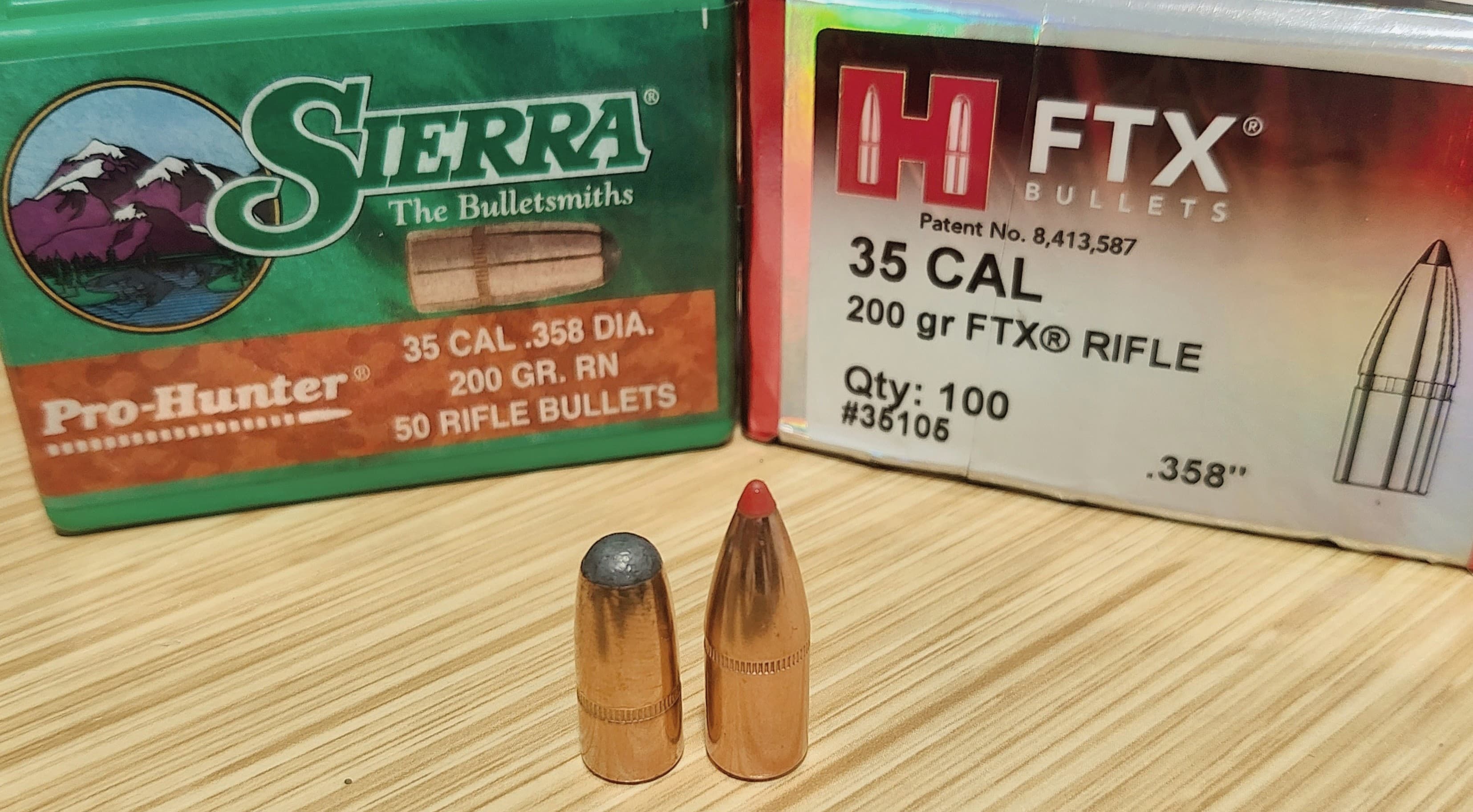
Knowing that CFE BLK is not a very dense powder and that the max charge listed by Hodgon for the 200-grain Pro-Hunters is actually a compressed load, I decided it would be reasonable to go ahead and load a full batch of these FTX .360 rounds just to see how they performed at the range. When I eventually made it to the range, I didn't chronograph the results, but I noticed the rounds were impacting around 4-5 inches below my Pro-Hunter loads at 50 yards, indicating to me that they were moving decently slower (my gut feel is probably on the order of 200-300fps, but I can't positively confirm), and probably in the range of your standard .35 Remington power levels. This was not the result I was hoping for, as interpolations from available load data and empirical velocity information from other reloaders lead me to believe that my .360 Buckhammer 200-grain Pro-Hunter handloads charged with CFE BLK are in the vicinity of 2,300 fps.
All this to say - just because you find a published value somewhere doesn't mean it's right. It’s easy to think of published loads as something you can anchor to, and while published data is useful, it doesn’t guarantee how a specific rifle and load will behave. This felt like a reminder that the rifle doesn’t really care about your expectations and that small changes at the bench show up on paper.
None of this is a conclusion - it’s just a note. At least in this rifle, with this bullet, at this distance. If anything, it’s the same idea that shows up everywhere else - pay attention to what’s actually happening, not what you expected to happen.
Safety note: These are personal notes and experiences, not load advice. Always verify load data with reputable published sources and work up safely in your own firearm.